3.8(Q2)
CiteScore
27
h-index
Volume & Issue: Volume 7, Issue 3, Summer 2023, Pages 149-222 
Number of Articles: 7

Green Synthesis and Characterization of ZnO Nanoparticles from Echinophora Platyloba DC. Extract and HSA Interaction Study

Pages 149-162

https://doi.org/10.22034/ajgc.2023.394268.1384

Fatemeh Karampour

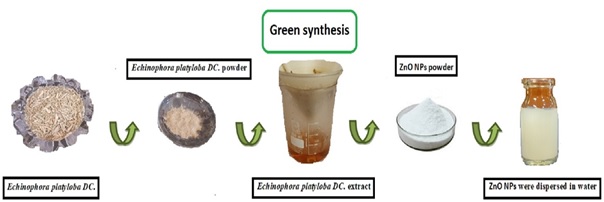
Abstract The zinc oxide nanoparticles (ZnO NPs) were produced by employing Echinophora platyloba DC extract (E. platyloba). The extract of E. platyloba is believed to act as a non-toxic source of stabilizing and reducing agent. The generation of the ZnO NPs was characterized by SEM-EDX, zeta potential, DLS, TEM, ultraviolet-visible, and FT-IR analysis. The green synthesized ZnO NPs are quasi-spherical in shape, some of which show facets and irregular shapes with different sizes from 27.18 to 54.24 nm. The corresponding average zeta potential value is -28.9 mV, which supports the high stability of ZnO NPs. The ZnO NPs interaction with human serum albumin (HSA) has been explored by employing absorption and fluorescence titration methods. Our finding revealed that the ZnO NPs quenched the HSA fluorescence via stat quenching mode. Assessment of the fluorescence quenching data indicated moderate binding affinity (Kb =2.10× 103 M−1 at 298.15 K) between ZnO NPs and HSA. In silico molecular docking studies further corroborated well with the experimental results.

Study the Effect of PH on Absorption and Fluorescence Spectra of Eosin Y Dye in Ethanol

Pages 163-174

https://doi.org/10.22034/ajgc.2023.393691.1381

Waleed Khalid Hamood Al-Behadili, Yaqoob M. Jawad, Hasan J. Hasan

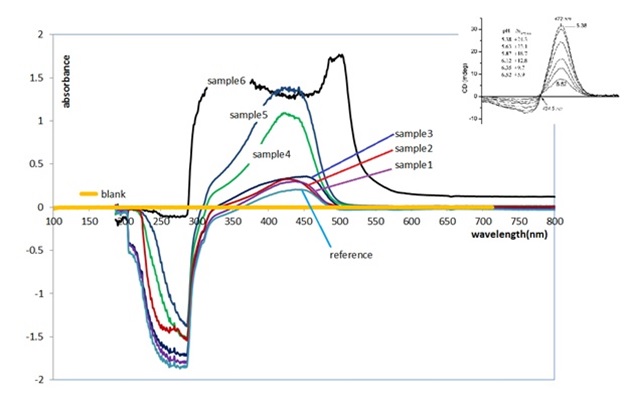
Abstract The excitation wavelength (λex= 490 nm) at room temperature was determined to examine the impact of pH on the absorption and emission spectra of an eosin y compound dissolved in ethanol at a concentration of 1×10⁻⁵ M. The relative fluorescence intensity of eosin in ethanol at the concentration of 1×10⁻⁵ M was decreasing with the increasing of acidity (pH < 7) and the red shift of fluorescence was decreasing by adding a few drops of 1N solution of HCl, (pH normal = 7.26). However when a few droplets of NaOH were added, it was observed that the opposite, the relative fluorescence intensity was increasing with increasing basicity (pH > 7) and the red shift of fluorescence was decreasing with increasing basicity. Characteristics like fluorescence and absorption wavelength were further measured, along with graphical correlations like the one between pH and the relative fluorescence intensity. The relative fluorescence intensity of eosin in ethanol at the concentration of 1×10⁻⁵ M was decreasing with increasing acidity and the red shift of fluorescence was decreasing with increasing acidity (pH 7). However when a few droplets of NaOH were added, it was observed that the opposite was true: the relative fluorescence intensity was increasing with increasing basicity and the red shift of fluorescence was decreasing with increasing basicity.

A Brief Overview of Plant-Derived Chemotherapeutic Agents for Cancer Therapy

Pages 175-179

https://doi.org/10.22034/ajgc.2023.388922.1375

Yaghoub Ahmadyousefi

Abstract Plants are the inexhaustible source of biologically active compounds. For thousands of years, humans have been using plants to treat diseases. In the past decades, a large number of researches have made many efforts to extract medicinal molecules from plants to treat diseases. The use of pure medicinal compounds has advantages over the use of medicinal plants in the traditional way. Pure compounds allow for better drug dose management and combination therapy. In addition, by focusing on the main therapeutic molecules, the unwanted effects of thousands of complex molecules in medicinal plants are eliminated. On the other hand, by determining the structure of pure pharmaceutical compounds, it is possible to manipulate them to improve therapeutic efficiency or reduce the side effects of the drug. In recent decades, some compounds have been extracted from plants that are the source of a number of important chemotherapy drugs for cancer treatment. This article provides a brief review of some chemotherapy drugs derived from plants.

Therapeutic Applications of Salvadora Persica Plant in Medical Sciences: A Review Article

Pages 180-188

https://doi.org/10.22034/ajgc.2023.388764.1374

Amin Monjezi, Payam Karimian, Vahid Yousofvand

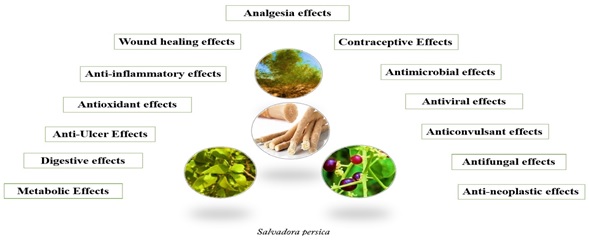
Abstract The Salvadora persica plant has been used for medicinal purposes since ancient times. Many studies have demonstrated its potential as a therapeutic agent. Salvadora persica stick is commonly used to improve oral health. This plant has many benefits, including its antipathogenic, anti-inflammatory, anti-cancer, wound healing, metabolic, digestive, and contraceptive activities. The purpose of this study is to investigate the effects of Salvadora persica on therapeutic and medical aspects other than oral and dental hygiene.

Tap Water and RO Outlet Water a Novel Greener Route to Catechol Synthesis in H2O2

Pages 189-198

https://doi.org/10.22034/ajgc.2023.390693.1389

Khemchand Rajendra Surana, Sagar V. Bhavar, Vijayraj N. Sonawane, Dhananjay M Patil, Deepak D Sonawane, Sunil K Mahajan

Abstract Dakin oxidation reaction is a widely used reaction for the synthesis of phenolic compounds such as catechol in industry, this is cheap and simple method definitely will attract attentions and find potential application in near future. A new way of synthesizing catechol was developed using the Dakin reaction in a more environmentally friendly way. In fact, aromatic aryl aldehydes can be turned into phenols at room temperature with the help of H2O2 in tap water and RO Outlet water as catalyst. It is amazing that catalytic system doesn't need activation or any transition metal catalyst, toxic ligand, additive/promoter, base, organic solvent, etc. To find out what this protocol can do, a number of substituted hydroxylated benzaldehydes were tried.

Extraction of Curcumin by Ultrasonic Waves from Turmeric Rhizome as a Scaffold in 4D Prosthesis

Pages 199-207

https://doi.org/10.22034/ajgc.2023.393836.1383

Ashraf Heidaripour, Tina Barati

Abstract Breast cancer is one of the most common cancers and a large number of breast surgeries are performed every year. Most of these surgeries require the use of breast three dimensions (3D) prostheses and implants or drug-containing scaffolds. In most cases, prostheses and scaffolds are made of organic and inorganic materials which are not biocompatible. Using plant tissues and fibers instead of these materials to make 3D prostheses and scaffolds that naturally contain anti-cancer drugs is a new idea that has gained attention in recent decades. Recently, the radiation of infrared light (IR) waves to the organ containing the drug-carrying 3D prosthesis has been used to release the desired amount of drug from prosthesis at the desired time after surgery. The IR radiation is introduced as the fourth dimension in the 4D prosthesis and is a newer idea. In this research, the ultrasound waves have been proposed as a fourth dimension for drug release and turmeric rhizome as a scaffold containing curcumin as an anti-cancer substance. The process of releasing the curcumin from the turmeric rhizome - as a scaffold - with ultrasonic waves is a new and innovative idea that is in line with the development of 4D prosthetics.

Dermatology Benefits of Punica Granatum: A Review of the Potential Benefits of Punica Granatum in Skin Disorders

Pages 208-222

https://doi.org/10.22034/ajgc.2023.388077.1388

Farshad Akbarnejad

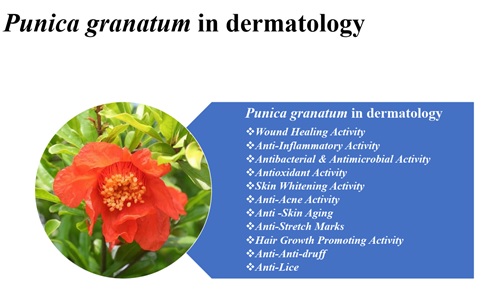
Abstract This article is the first comprehensive research that review of the potential benefits of Punica granatum in dermatology. Currently, since plant extracts are used in skin, hair, and cosmetic industry far more than before, concerning that pomegranate is native to Iran, this overview of its properties in skin diseases field is based on scientific research of this valuable fruit.