3.8(Q2)
CiteScore
27
h-index
Volume & Issue: Volume 6, Issue 1, Winter 2022, Pages 1-102 
Number of Articles: 7

Highly microporous activated carbons from Mangifera indica residues: Optimization of preparation conditions using response surface methodology

Pages 1-13

https://doi.org/10.22034/ajgc.2022.1.1

Naphtali Odogu Ankoro, René Blaise Ngouateu Lekene, Julius Nsami Ndi, Daouda Kouotou, Horace Manga Ngomo, Joseph Mbadcam Ketcha

Abstract Full factorial design (FFD) was applied to generate the matrix of experiments for optimizing the residence time (60–120 min), the activation temperature (600–800 °C) and the impregnation ratio (0.25 – 0.50) for the activated carbons preparation based Mangifera indica residues chemically activated. The three responses chosen namely the activated carbon yield (AcYd), the iodine number (ION) and the methylene blue number (MBN) were thoroughly studied and represented in all the experimental domain using the Minitab 16, Inc. and the Sigma16, Inc. software for regression analysis and response surface plots respectively. The results of optimization under the experimental domain revealed that the optimal conditions identified were 800 °C, 120 min and 0.50 for the activation temperature, the residence time and the impregnation ratio respectively. The aforementioned optimal conditions gave 22.7%, 1236 mg/g and 9.61 mg/g for the AcYd, ION and MBN respectively. The activated carbon prepared under this optimal condition conducted to the specific surface area of 831 m2/g as determined by the BET method, with predominance of micropores. Also, the Mangifera indica residues were found to be an effective precursor for the preparation of highly microporous activated carbons for depollution purpose.

Eichornia crassipes mediated biofabrication of silver nanoparticles and spectroscopic evaluation of its catalytic efficacy in the degradation of azodyes

Pages 14-23

https://doi.org/10.22034/ajgc.2022.1.2

Devika Jayasree, Sreebamol K. S, Anu Gopinath

Abstract Aquatic resources explored for the biofabrication of nanoparticles are mainly the weed-plants owing to their wide distribution and abundance. Eichornia crassipes (Water hyacinth) is considered the most notorious aquatic weed due to its prolific spreading ability in water bodies. The present study investigated the ability of aquatic weed Eichornia in green synthesis of silver nanoparticles and the catalytic efficacy of the thus made nanoparticles in degradation of azodyes, a major class of industrial pollutants. The method adopted is entirely a green chemistry approach and is facile, economical, and efficient in mass production. The synthesis was confirmed by observation of SPR peak at 422 nm. FTIR revealed the presence of phenols, amino acids, and carbohydrates. TEM analysis confirmed the particle to be nearly spherical with a size distribution from 10-20 nm. , The crystallinity of the particle was assessed using XRD technique and the crystalline size was calculated 14.64. The catalytic efficacy of the nanoparticle was then spectrophotometrically monitored. The degradation of pollutants was 92.46% and 91.9%, respectively for methyl orange and methylene blue. Thus, the biosynthesized silver nanoparticles using low-valued renewable resources like aquatic weeds proved a promising tool in aquatic bioremediation.

A design for convenient and greener root towards one-pot multi-component synthesis of substituted pyrano-dichromeneo-dione and chromeno-pyrido-pyrimidinone derivatives using rice husk based heterogeneous catalyst

Pages 24-39

https://doi.org/10.22034/ajgc.2022.1.3

Sourav Dey, Puja Basak, Subhajit Sarkar, Pranab Ghosh

Abstract In this work, a convenient and greener procedure for synthesizing substituted pyrano-dichromeno-dione and substituted chromeno-pyrido-pyrimidinone derivatives were explored using Sulphonated Rice Husk (SRH) as a novel bio-degradable, greener, heterogeneous catalyst. We designed an efficient pseudo three-component synthetic method for 7-aryl/heteroaryl substituted pyranodichromene-6, 8-dione and 7-aryl/heteroaryl substituted chromeno[4, 3-d]pyrido[1, 2-a]pyrimidinone derivatives using this greener catalyst (SRH) under reasonable reaction condition. The fundamental features of this procedure are the operational simplicity, hassle-free recovery of product, and reusability of the catalyst with excellent product yield (up to 98%). The toxic metal-free catalyst was prepared conveniently, and characterized using different spectroscopic techniques, including Fourier-transform infrared spectroscopy (FTIR), X-ray diffraction analysis (XRD), scanning electron microscopy (SEM), energy dispersive X-ray spectroscopy (EDX). Then the synthesized material was used for the greener synthetic target.

Solvent-free mechanochemical green synthesis of Schiff bases of tranexamic acid and study of their urease inhibitory and antioxidant activities

Pages 40-47

https://doi.org/10.22034/ajgc.2022.1.4

Abid Zulfiqar, Dildar Ahmed

Abstract Three Schiff bases of tranexamic acid were successfully synthesized by a mechanochemical green method, which is 4-{(5-bromo-2- hydroxybenzylidene)amino]methyl}cyclohexanecarboxylic acid (SB1), 4-{(2-hydroxybenzylidene)amino]methyl}cyclohexanecarboxylic acid (SB2), and 4-{(4-nitrobenzylidene)amino]methyl}cyclohexanecarboxylic acid (SB3) in good yield. Their structures were confirmed based on spectroscopic data. The bases displayed considerable urease inhibitory activity with IC50 (µg/mL) 33.41, 40.64, 26.18, and 11.14 for SB1, SB2, SB3, and standard thiourea, respectively. They revealed weak antiradical activity in DPPH assay with EC50 (µg/mL) 1138, 1239, and 24248 for SB1, SB2, and SB3, respectively. In conclusion, grinding is an efficient and environmentally friendly method for synthesizing these bases, which may provide potential candidates for new medicines.

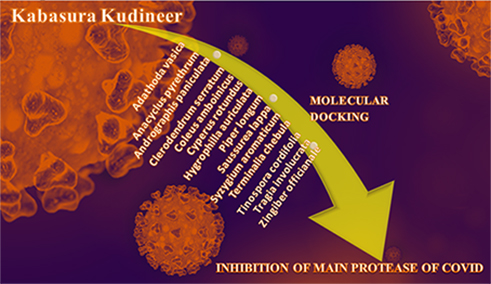
Molecular docking studies on phytoconstituents of kabasura kudineer-a siddha formulation on corona protease enzyme

Pages 48-67

https://doi.org/10.22034/ajgc.2022.1.5

Bala Aakash Velmurugan, Bhuvaneswari Sivaraman, Ramalakshmi Natarajan, Nalini Nagarajan

Abstract Coronavirus has created apandemic worldwide. COVID is a type of Severe Acute Respiratory Syndrome and Middle East Respiratory Syndrome affecting numerous people. It is the most prevailing deadly situation in the world. India crossed over 19 lakh cases with almost nearer to 40,000 deaths. In Tamil Nadu, an ancient Siddha system of medicine gave us hope through phytoconstituents against the coronavirus. This work compares the potentiality among herbal constituents of kabasura kudineer. Siddha formulation, kabasura kudineer comprises the herbal composition of 15 plant drugs. The major 25 phytoconstituents of herbal plants were chosen and predicted for their necessary molecular properties. All the ligands were docked with the main protease of COVID-19 (PDB ID 6LU7) using Autodock 4.2. The binding interactions were viewed in Biovia Discovery Studio. Also, allopathy drugs Hydroxychloroquine, Remdesivir, and Favipiravir were docked for comparison. The interactions were explained comparatively. Validation of docking was also done with the N3 ligand. About 16 ligands passed the Lipinski rule of five. All the ligands showed good binding energies in the range of -5.01 and -11.41 kcal/mol. The inhibition constants resulted in the range of 6.62-561.49 µm. The constituents andrographolide(3A), carvacrol(5A), piperine (8A), anethole(9A), 8-gingerol(14A), and eugenol(10A) from Andrographispaniculata, coleus amboinicus, piper longum, Sussurealappa, Zingiberofficianale, Syzygiumaromaticum, respectively, were analyzed to be potential inhibitors of 6LU7 enzyme. The phytoconstituents of the herbal plant drugs were analyzed to be effective in inhibiting the viral protease to prevent replication and maturation of the virus in the host. Therefore, herbal medicine, kabasura kudineer was significant against corona viral infection.

Review on role alkyne and azide building blocks for click chemistry in organic synthesis and their application

Pages 68-87

https://doi.org/10.22034/ajgc.2022.1.6

Hala Shkyair Lihumis, Zainab Abbas Al Talebi, Saleem Hussein Shanan

Abstract Click chemistry is a powerful, high-fidelity technology of organic reactions that involves the rapid and efficient covalent coupling of two or more functional chemical entities to form diverse heterocycles under environmentally acceptable conditions. Click reactions are characterized to give a single product, high economy, high and pure. We have discussed many elements of click reactions in organic synthesis because they are essential and useful in drug discovery, supramolecular chemistry, materials science, and nanotechnology. Azide-alkyne cycloaddition (AAC) is an essential technique with the reaction of the trephine between the azide group and the alkene based on Cu(I) ions and nanoparticles. Over the last years, using catalyst transition metal of novel methods in click chemistry reactions with applications in materials, drug, and biological activity has been increased significantly.

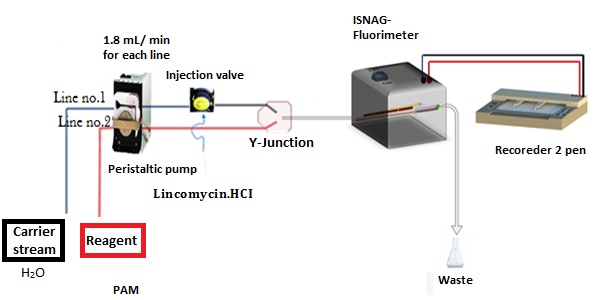
Development of a new methodology for Lincomycin.HCI (LINO.HCI) determination using phosphomolybdic acid (PMA) as a reagent and ISNAG-Fluorimeter Instrument via CFIA

Pages 88-102

https://doi.org/10.22034/ajgc.2022.1.7

Nagham Shakir.Turkie, Zahraa Naeem Abd Oun

Abstract The reaction is based on the Lincomycin that has been responded. In an acidic solution, combine HCl and phosphomolybdic acid to produce a white color precipitate that may be measured using an ISNAG-Fluorimeter (homemade instrument). Some chemical and physical variables have been evaluated. The correlation coefficient was r=0.9983. The calibration curve was linear (the range was 0.0051 mmol/L). The minimum detection limit concentration in the linear dynamic range of the calibration curve was 19.935 ng. The RSD percent of lincomycin HCl at 0.3 and 0.8 mmol/L was less than 0.25% (n=8). The approach was used to determine lincomycin HCl in three pharmaceutical tablets. Comparisons were made using a standard expansion approach and a matched t-test between the recently created method and the traditional strategy (UV-Vis spectrophotometry and turbidimetry with a turbidimeter). At the 95% confidence level, there was no significant difference between the two techniques.