3.8(Q2)
CiteScore
27
h-index
Volume & Issue: Volume 5, Issue 1, Winter 2021, Pages 1-150 
Number of Articles: 10

Nano-N,N,N',N'-tetramethyl-N-(silica-n-propyl)-N'-sulfo-ethane-1,2-diaminium chloride as an efficient and recyclable catalyst for the green synthesis of 3,4‐dihydropyrimidin‐2‐(1H)‐ones/thiones

Pages 1-11

https://doi.org/10.22034/ajgc.2021.102862

Roghayyeh khanivar, Abdolkarim Zare, Masoud Sadeghi-Takallo

Abstract In this work, efficient and high-yielding green synthesis of 3,4‐dihydropyrimidin‐2‐(1H)‐ones and 3,4‐dihydropyrimidin‐2‐(1H)‐thiones was achieved by a one-pot three-component reaction between aldehydes, ethyl acetoacetate, and urea/thiourea, using a recyclable mesoporous nanocatalyst entitled nano-N,N,N',N'-tetramethyl-N-(silica-n-propyl)-N'-sulfo-ethane-1,2-diaminium chloride (nano-[TSPSED][Cl]2). High yields, short reaction times, solvent-free conditions, easy purification of the products, compliance with green chemistry protocols and recyclability of the catalyst are the benefits of this work. The products were obtained in 80-98 % yields and in 10-45 min.

Identification of medicinally active flavonoids, phenolic compounds and terpenoids from traditional healing plant barleria strigosa and its antioxidant activity

Pages 12-22

https://doi.org/10.22034/ajgc.2021.103416

Mundengara Deepak, Cheruthazhakkat Sulaiman, Indira Balachandran, Kitharathu P. Subhash Chandran

Abstract Barleria strigosa willd, a popular medicinal plant used mainly in Asian countries as a natural medicine. The root and leaves of this plant has been used in various traditional medicine systems in Asia. The present study intends to explore the medicinal activities and to detect the phytochemical constituents responsible for the therapeutic activities. Major antioxidant assayssuch as ABTS (2,2’azinobis (3-ethylbenzothiazoline-6-sulphonic acid)) scavenging, nitric oxide quenching, ferric reducing and DPPH (1,1-diphenyl-2-picrylhydrazyl) scavenging were done on different extracts to identify the effective extraction method.  An activity based isolation of major compounds was conducted on the hydroalcohol extract and characterizations of the isolated compounds were done using1H, 13C NMR and mass spectrometry. Among the tested samples, hydroalcohol extract revealed higher phenolics and flavonoids contentsand also exhibited predominant results in various antioxidant assays. Significance pβ-hydroxy-20(29)-lupene, lup-20(29)-ene-3β,28-diol, 3-beta-hydroxyolean-12-en-28-oic acid, 22,23-dihydrostigmasterol, 3,3',4',5,7-pentahydroxyflavone, (2S,3R)-2-(3,4-dihydroxyphenyl)chroman-3,5,7-triol and 3-caffeoylquinic acid. B. strigosa is a rich source of medicinally active terpenoid, phenolic and flavonoid compounds and possess potent antioxidant activities which are beneficial for human health as a green pharmaceutical medicine.

Phytochemical studies of Cynodon dactylon (L.) and isolation and characterization of bis(2-ethylheptyl) phthalate from the plant

Pages 23-38

https://doi.org/10.22034/ajgc.2021.104596

Ali Allahresani, Fatemeh Ghorbanian, Milad Kazemnejadi, Mohammad Ali Nasseri

Abstract In this study, the phylum Cynodon dactylon was assessed phyto-chemically. The results revealed that the plant had a rich source of phytochemicals as the root of this plant contains 830.27 mg/kg of carbohydrate. Also, 2.5 mg/g phenolic compounds were found in the ethanolic extract of the plant. Fatty acid composition of the plant as also investigated, wherein palmitic acid and linoleic acid had the highest contents in aerial parts of C. dactylon with 37.63% and 30.45%, respectively. In addition, high antiradical activity was found for the stem extract of the plant. Finally, bis(2-ethylheptyl) phthalate as an anti-oxidant and anticancer compound was extracted from the C. dactylon plant stem extract and fully identified and characterized using the FT-IR, CHN, 1H NMR, 13C NMR analysis along with various 2D NMR techniques.

Evaluating performance of malva sylvestris leaf extract for protection of mild steel against corrosion in acidic solution

Pages 39-57

https://doi.org/10.22034/ajgc.2021.104987

Nasrin Soltani, Maryam Khayatkashani

Abstract In this study, Malva sylvestris (M. sylvestris) leaf extract was evaluated for the protection surface of the mild steel in 2.0 M HCl solution. For this purpose, the classical method of weight loss and electrochemical methods potentiodynamic polarization and electrochemical impedance spectroscopy (EIS) were used in the first step to assess the performance of the extract. The results showed that, by changing the concentration of the extract from 0.25 g/L to 2.0 g/L in 2.0 M HCl solution, percent inhibition increased from 47% to 93% (for the concentration of 2.0 g/L). In addition, no significant change in the percentage of inhibition was observed as the concentration of the extract exceeded 2.0 g/L. The effect of the temperature on the behavior of the extract, for concentrations of 0.25, 0.5, 1.0, 1.5, and 2.0 g/L, at 35, 45, 55, and, 65 °C, were also investigated using polarization method. The percentage of inhibition and coverage were calculated to obtaining the kinetic parameters. The results revealed that, the absorption of molecules of the extract on the surface of the steel obeyed from the Langmuir adsorption isotherm and it was a physical adsorption type.

Sonochemical degradation of malachite green in the presence of persulphate, Co (II) and Fe (II) as catalyst

Pages 58-70

https://doi.org/10.22034/ajgc.2021.108073

Shahla Daneshmehr, Mohammad Taghi Taghizadeh, Ahmad Nakhaei

Abstract Nowadays, one of the most important global concerns is water pollution which showed increasing trends during the recent decades. The aim of this study was to develop a new method, based on the increment of degradation rate by using immobilized Co and Fe ions and activated persulphate to form hig

An overview on sustainable hydrogen supply chain using the carbon dioxide utilization system of formic acid

Pages 71-90

https://doi.org/10.22034/ajgc.2021.108576

Nima Norouzi, Ghazal Kalantari

Abstract The high hydrogen generation capacity is a safe and non-toxic substance that has have made the formic acid a perfect hydrogen carrier candidate. This promising future caused substantial investments in formic acid production during the last decades. One of the essential developing methods is the chemical reduction methods in which the recent developments in the catalysts is the selective hydrogen production from acidic substances such as formic acid. These critical developments and characteristics of the formic acid and hydrogen fuel highlight the future of the formic acid in the transportation and fuel cell energy systems. In this research study, the future and the potential of the formic acid for the hydrogen generation was studied in terms of the full scale sustainable and green supply chain.

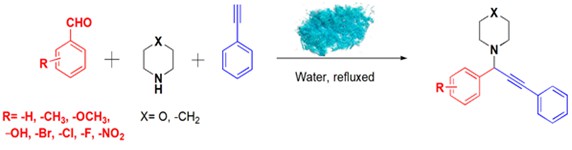
A greener and sustainable approach towards the synthesis of propargylamine using multicomponent A3-coupling reaction

Pages 91-110

https://doi.org/10.22034/ajgc.2021.109230

Rabindranath Singha, Dhiraj Brahman, Biswajit Sinha, Pranab Ghosh

Abstract The abundance of toxic contaminated effluents from the pharmaceutical industries and the serious risk of contamination of the aquatic systems combine to provide strong motivating factors to tackle this environmental problem. Use of non hazardous chemicals, reaction in aqueous medium is an interesting ecological alternative for the bulk production of important drugs and fine chemicals. Taking advantage of the remarkable ability of the selected catalytic systems, alternative sustainable methods have been exploited for the decontamination of industrial effluents and exhausts. Working in the same direction herein, we present a newly developed metal-organic complex [Bis(picolinate-κ2N:O) Cu(II)] catalysed A3-coupling reaction in water which has established an excellent greener protocol to yield propargylamine. Low toxicity, easy access to active sites, high surface area, high thermal stability, recyclability of the catalyst and easy way to separate the catalyst from the reaction mixture are the added advantage of this developed greener and sustainable protocol.

Application of red mangrove plant (Rhizophora racemosa) extracts as pH indicator

Pages 111-124

https://doi.org/10.22034/ajgc.2021.113192

Uebari Korfii, Ndokiari Boisa, Ideriah Tubonimi

Abstract Despite the importance of dyes within the industrial and research settings, the literature lacks information on the utilization of red mangrove forest resources and its applications. In this research study, red mangrove plant (Rhizophora racemosa) extracts were characterized and evaluated for its potential as an indicator. The extraction was done using the traditional method of extraction with water and ethanol as solvents. The extracts were characterized using ultraviolet-visible (UV-vis) spectroscopy and Fourier transform infra-red (FT-IR) spectroscopy. Extracts from the plant were applied in different types of acid-base titrations. Following extraction, the UV-vis analyses of the water extract of Rhizophora racemosa showed a λmax at 450 nm while that of theethanol extract revealed a λmax at 400 nm.  However, after a 72hour timepoint, the water extract of the Rhizophora racemosa showed a λmax at 559 nm while that of theethanol extract demonstrated a λmax at 572 nm. The results of the FT-IR analysis revealed the presence of the O‒H for alcohol and phenol, C=O for carboxylic acid, C‒H for methyl group, and N‒O for the nitro group. Moreover, the endpoints for all titration conducted using red mangrove plant (Rhizophora racemosa)extracts were similar to the endpoints obtained using standard synthetic acid-base indicators. This was confirmed by a change in colour of the extracts from yellow in an acidic solution to red wine in the alkaline solution. The results provided established the suitability of Rhizophora racemosa as a pH indicator. 

One-pot conversion of arylamines, DEC and ethylene oxide to oxazolidinones catalyzed by ionic liquids

Pages 125-134

https://doi.org/10.22034/ajgc.2021.114556

Elnazeer H.M. Elageed, Abuelgasim A.A. Mohammed, Guohua Gao, Nawal M. Suleman

Abstract In this work, a simple green synthesis of six oxazolidinones derivatives from the reaction of arylamines, diethyl carbonate, ethylene oxide, and ionic liquids was studied. The prepared compounds were firstly purified using the chromatography, then characterized by 1H NMR and 13C NMR. The effect of ionic liquid amount, time, and temperature were examined. The optimal reaction conditions for one-pot conversion of these reactants were 130 °C, 12 h, and 10% amount of catalyst. The results demonstrated that the upper yield of oxazolidinone was provided by anions of ionic liquids with stronger bond basicity, that follows the order OAc->Cl->Br->BF4 below delicate reaction conditions, Bmim OAC was found to be an ideal catalyst for formation of some oxazolidinones in high yields.

Green synthesis of silver nanoparticles from Citrus sinensis peel extract and its antibacterial potential

Pages 135-150

https://doi.org/10.22034/ajgc.2021.113966

Kamrun Nahar, Md. Hafezur Rahaman, G.M. Arifuzzaman Khan, Md. Khairul Islam, Sharif Md. Al-Reza

Abstract In this research study, we reported a convenient and environmentally friendly method for the green synthesis of silver nanoparticles using Citrus sinensis (navel orange) peel. The synthesized silver nanoparticles were identified by colour change from colourless to dark brown due to surface plasmon resonance. The optimal synthesis condition for the AgNPs was determined by varifying different parameters such as peel extract concentration, temperature, AgNO3 concentration, effect of ratio of peel extract to AgNO3 solution, pH and reaction time. The synthesized nanoparticles were identified using the UV-vis spectrophotometer, transmission electron microscopy (TEM), scanning electron microscopy (SEM), and dynamic light scattering (DLS) techniques. The qualitative phytochemical analysis of peel extract was performed to determine the presence of the alkaloids, phenolics, flavonoids, carbohydrates, saponins, triterpenes and tannins. The presence of the phytochemicals were also confirmed by FT-IR spectroscopy analysis. The synthesized silver nanoparticle also revealed good antibacterial activity against some important bacteria Bacillus subtilis, Pseudomonas aeruginosa, Staphylococcus aureus and Escherichia coli.