3.8(Q2)
CiteScore
27
h-index
Volume & Issue: Volume 3, Issue 2, Spring 2019, Pages 125-287 
Number of Articles: 10

Benign synthesis of 5-substituted 1𝘏-tetrazoles 𝘷𝘪𝘢 [3+2] cycloaddition of nitriles and sodium azide employing SO₃H-carbon as an efficient heterogeneous catalyst

Pages 125-136

https://doi.org/10.22034/ajgc.2018.138421.1080

Gundabathini Sandhya Rani, Adigopula Jyotsna, Bethala L.A. Prabhavathi Devi

Abstract A novel and green methodology was developed for the synthesis of 5-substituted 1H-tetrazoles by [3+2] cycloaddition of nitriles with sodium azide in DMF at 100 °C in the presence of highly stable, water resistant and recyclable nonmetallic SO3H-carbon catalyst derived from glycerol. The methodology was extended for the preparation of different 5-substituted 1H-tetrazoles from arylnitriles having electron donating as well as electron releasing groups on the arene nucleus in good to excellent yields (85‒95%) under optimum reaction conditions. The catalyst was recovered using simple filtration and reused for five cycles without any loss of activity. The main advantages of this methodology are moderate temperature, easy purification of products, easy recovery, and reusability of the catalyst. 

Water extract of onion catalyzed Knoevenagel condensation reaction: an efficient green procedure for synthesis of α-cyanoacrylonitriles and α-cyanoacrylates

Pages 137-152

https://doi.org/10.22034/ajgc.2018.137885.1079

Prabakaran Kaliyan, Sivakumar Matam, Seenivasa Perumal Muthu

Abstract A useful method for Knoevenagel condensation has been developed from the reaction between active methylene compound 1 and aldehyde 2 using the water extract of onion as a green catalyst. This method is suitable for variety of aldehydes including, substituted aromatic, aliphatic, α, β-unsaturated, and heterocyclic with malononitrile or ethyl cyanoacetate, and affords the α-cyanoacrylonitriles and α-cyanoacrylatesin excellent yields (Up to 98%). The products are isolated without column chromatography. The use of water extract of onion has several advantages such as low price, easy handling, simple work up procedure and environmentally benign.

Perovskite photovoltaic nanostructured materials: device architectural design, challenges and recent progress

Pages 153-168

https://doi.org/10.22034/ajgc.2018.140157.1081

Augustine U. Agobi, Louis Hitler, Sadia Ahmed, Oyebanji Oluwatomisin Funmilayoe, Saud-Uz- Zafar, Adejoke T. Hamzatf, Oluwatobi O. Amusan, Amos I. Pigweh, Ozioma U. Akakuru, Aderemi T. Adeleye, Thomas O. Magub

Abstract The necessity of cheap energy from a clean and abundant source has naturally stirred a large research effort to find low cost and high efficiency devices to convert sunlight to electricity. A range of solution processed organic and hybrid organic−inorganic solar cells, such as dye-sensitized solar cells (DSC) and Bulk Heterojunction (BHJ) organic solar cells, have been intensely developed in the last two decades, but the conversion efficiencies required to compete in the energy market have not yet been realized. Now researchers focusing to the field of solution processed photovoltaic for the lead halide perovskite solar cell (PSC). The engineering improvements of perovskite formulations and fabrication routines have led to significant increases in power conversion efficiency (PCE%) with recent devices reaching over 22%. This review discusses the progress of perovskite solar cells focusing on device architectural design, major challenges, recent progress, and its future perspectives.

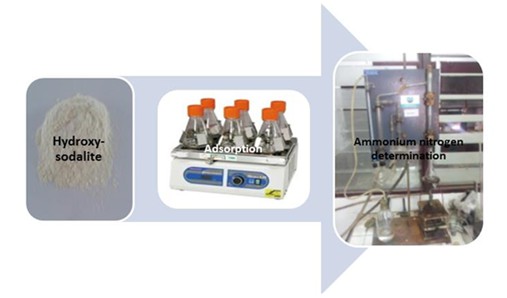
Removal of ammonium ions from aqueous solution using hydroxy-sodalite zeolite

Pages 169-186

https://doi.org/10.22034/ajgc.2018.140227.1083

Lawrence Tatanah Nanganoa, Guy Tagne Merlain, Julius Nsami Ndi, Joseph Mbadcam Ketcha

Abstract In this research study, the removal of ammonium ions from aqueous solution by hydroxy-sodalite (HS) was evaluated. The effects of the contact time, pH, initial concentration, adsorbent dose, and the presence of other competing ions on ammonium ions removal were also studied. The result showed that the pH less than 7 was the best for ammonium adsorption, and the optimum removal was achieved at pH 7. Langmuir (Two linear forms), Freundlich, Harkin-Jura, Halsey, and Elovich isotherm models were fitted to the experimental data. These data were found to fit well with the Freundlich isotherm model. Kinetic experiments showed that equilibrium was reached after 60 min and the data correlated best with the pseudo-second order model. The presence of competing ions in solution affected the ammonium ions adsorption capacity. Overall, this adsorbent has the potential to remove ammonium ions from wastewater.

A review on plant extract mediated biogenic synthesis of CdO nanoparticles and their recent applications

Pages 187-200

https://doi.org/10.22034/ajgc.2018.140313.1084

Suresh Ghotekar

Abstract Development of an environmentally benign route for synthesis of nanomaterial is a remarkable step in the field of nanotechnology. Nanotechnology involves the tailoring of materials at the atomic level to attain peculiar and special properties, which can be seemly manipulated for many applications. Among the all metal oxide nanoparticles, cadmium oxide nanoparticles (CdONPs) have attracted a great deal of attention due to its superior biological, chemical, and physical properties. Green protocol of synthesizing nanoparticles has emerged as an optional way to overcome the limitation of the conventional methods. Plant, biopolymers, and microorganisms are majorly used for green synthesis of nanoparticles. Using plants towards synthesis of nanoparticles are emerging and also beneficial compared to microbes with the presence of broad variability of biomolecules in plants which can act as capping and stabilizing agents and so increases the rate of stabilization of synthesized nanoparticles. Also, the nanoparticles produced by the plants material are more stable than the microorganisms. Therefore, among the all organisms plants are best potential candidates for biosynthesis of CdONPs and they are suitable for large-scale biosynthesis. In this review, the green synthesis of CdONPs, protocol of syntheses, mechanism of formation, and their miscellaneous applications have been discussed.

Highly asymmetric aldol reaction of cyclohexanone and aromatic aldehydes catalyzed by bifunctional cyclohexane derived thiourea organocatalyst

Pages 201-215

https://doi.org/10.22034/ajgc.2018.141271.1086

Hanmant M. Kasralikar, Suresh C. Jadhavar, Sudhakar R. Bhusare

Abstract Novel two L-proline analogues as thiourea organocatalysts were synthesised, first is the assembly of a structurally well-defined cyclohexane scaffold with a thiourea moieties and amine functionalities could constitute a new class of organocatalysts. Second is the triazole-3-thione analogue. The first one found to be efficient catalysts for the direct asymmetric aldol reaction between ketone and aromatic aldehydes. The catalysts exhibited high catalytic activity, diastereoselectivity and excellent enantioselectivity at room temperature with a low loading.

Design and synthesis of two steroid derivatives from 2-nitroestrone and theoretical evaluation of their interaction with BRCA-1

Pages 216-235

https://doi.org/10.22034/ajgc.2018.144189.1093

Figueroa-Valverde Lauro, Diaz-Cedillo Francisco, Rosas-Nexticapa Marcela, Mateu-Armand Virginia, Montano-Tapia Elizabeth, Hau-Heredia Lenin, Lopez-Ramos Maria, García-Cervera Elodia, Pool-Gómez Eduardo, Cauich-Carrillo Regina, Alfonso-Jimenez Alondra, Cabrera-Tuz Jhaira

Abstract Several compounds have been prepared to treatment of breast cancer; however, some of these drugs may produce some side effects. The aim of this study is to synthesize two new steroid derivatives (Compounds 7 or 8) to evaluate their theoretical interaction with a breast cancer protein (BRCA-1) using a docking model. The preparation of 7 and 8 was carried out using a series of reactions which involves; (i) addition/cyclization; (ii) amination, (iii) etherification and (iv) esterification. Chemical structure of the compounds was confirmed using elemental analysis and NMR spectrum. The following stage involved the theoretical evaluation on the interaction of both compounds 7 or 8 with BRCA-1 protein surface using a docking model. The results showed that compound 7 could bound to different type of amino acid residues of BRCA-1 protein compared with 8; this phenomenon, may exert changes in the biological activity of BRCA-1 protein. All data suggest that compound 7 or 8 could be an alternative therapeutic for treatment of the breast cancer.

Cationic dye (methyl violet) removal from aqueous solution by egg membrane in a batch biosorption process

Pages 236-257

https://doi.org/10.33945/SAMI/AJGC.2019.3.8

Beniah O. Isiuku, Chigoziri Ugwueze Nwogu

Abstract Non-modified egg membrane was used to remove methyl violet from aqueous solution by batch biosorption at various experimental conditions. Isotherm, kinetic and thermodynamic as well as biosorption mechanism were investigated and discussed. Dye uptake increased with increase in initial dye concentration but decreased with increase in time. Maximum biosorpion capacity and optimum temperature were 161 mg/g and 45 °C respectively. Liquid film diffusion controlled the process which was endothermic, spontaneous and physisorptive. Egg membrane appears to be a novel natural membrane for removing cationic substances from aqueous solutions. It is environmentally friendly. 

Insight into the structural and spectral (IR and UV-Vis) properties of the salts of alkali (Li, Na and K) and alkaline earth (Be, Mg and Ca) metals with pertechnetate oxoanion (⁹⁹ᵐTcO₄⁻) as the convenient water-soluble sources of the radioactive element technetium

Pages 258-270

https://doi.org/10.22034/ajgc.2018.144525.1096

Mehdi Nabati

Abstract A quantum mechanical (QM) study is done to unveil the structural and electronic properties and spectroscopy analyses (IR and UV-Vis) of the alkali (Li, Na and K) and alkaline earth (Be, Mg and Ca) salts of the pertechnetate oxoanion (99mTcO4-) using density functional theory (DFT) method by the popular B3LYP (Becke, three-parameter, Lee-Yang-Parr) exchange correlation functional with 6-31+G(d,p) basis set. Also, the Lanl2DZ effective core potential basis set of theory is used to compute the technetium-99m radioisotopes. The frontier molecular orbitals (FMOs) calculations indicate that the sodium and beryllium salts of pertechnetate anion are more susceptible to react with electron-donating compounds and also, the oxygen atoms, technetium-99m radioisotopes and the cations (Li+, Na+, K+, Be2+, Mg2+ and Ca2+) have negative, zero and positive electrostatic potentials, respectively.

Response surface methodology: photodegradation of methyl orange by CuO/ZnO under UV light irradiation

Pages 271-287

https://doi.org/10.22034/ajgc.2018.135387.1078

Siti Nur Surhayani Jefri, Abdul Halim Abdullah, Ernee Noryana Muhamad

Abstract Zinc oxide (ZnO) and copper oxide doped zinc oxide photocatalysts (CuO/ZnO) were synthesized by precipitation method. The effect of CuO loading on the physicochemical properties and photocatalytic performance of ZnO in photodegrading methyl orange dye solution (MO) was investigated. The produced ZnO has a crystallite size of 61.1 nm, surface area of 4.43 nm2/g and band gap energy of 3.30 eV. After doping with 0.8% CuO, the crystallite size decreased to 19.4 nm while the surface area increased to 8.2 mm2/g. The band gap energy, however, remained the same indicating that low CuO content did not affect the optical properties of ZnO. The efficiency of the photocatalystsin photodegrading MO was evaluated under different conditions. Photocatalytic activities showed that the highest removal of 54.1% was achieved when 5 ppm of MO solution was degraded by 0.6 g of 0.8% CuO/ZnO at pH 6.8. The response surface methodology (RSM) was employed to develop a quadratic model as a functional relationship between the amounts of the degraded MO (mg/g) and three experimental factors (mass loading, MO initial concentration and MO initial pH). The highest amount of the degraded MO was 12.8 mg/g when 0.2 g of 0.8% CuO doped ZnO was used in 5 ppm MO at pH 5.