3.8(Q2)
CiteScore
27
h-index
Volume & Issue: Volume 10, Issue 2, March and April 2026, Pages 181-371 
Number of Articles: 12

Ultrasonic Extraction of Arnica–Chamomile Gel: Antimicrobial and Safety Evaluation

Pages 181-195

https://doi.org/10.48309/AJGC.2026.542761.1816

Sharuniveda Sankaranarayanan, Umamaheswari Thirupamburam Natarajasundaram

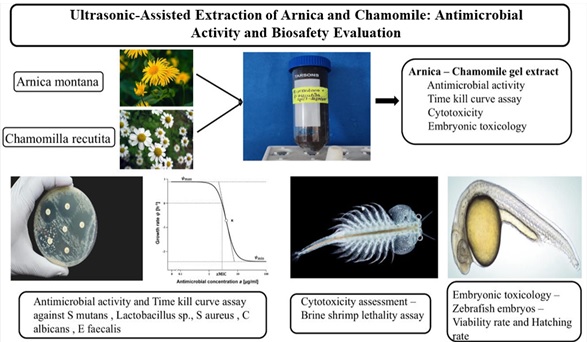
Abstract Herbal formulations are gaining attention as complementary options to conventional therapies due to their phytochemical diversity, favorable safety, and broad therapeutic potential. Arnica montana and Chamomilla recutita are particularly recognized for antimicrobial, antioxidant, and anti-inflammatory properties, making them suitable for novel biomedical applications. In this study, an Arnica–Chamomile gel was prepared using aqueous extracts and evaluated for antimicrobial efficacy and preliminary safety. The formulation was tested against bacterial and fungal strains using standard assays, with time-kill kinetics providing insight into dose- and time-dependent activity. Safety was assessed through brine shrimp lethality and zebrafish embryotoxicity models. Results indicated promising antimicrobial effects, especially against bacterial strains, with acceptable tolerability at therapeutic levels. However, higher concentrations showed variability, underscoring the need for optimization before clinical translation. These findings support the potential of Arnica–Chamomile gel as a sustainable, plant-based preparation and highlight the relevance of traditional botanicals in modern biomedical research.
Green Extraction, Phytochemical Profiling, and Biological Evaluation of Allium Humile Hydroalcoholic Extract

Pages 196-212

https://doi.org/10.48309/AJGC.2026.540330.1807

Ramenani Hari Babu, Gangavath Kalpana Devi, Venkatesan Natarajan, Patibandla Jahnavi, Kandibanda Sudheer Kumar, Mahalakshmi Ganesan, Soniya Rani, Elias Joel Mart

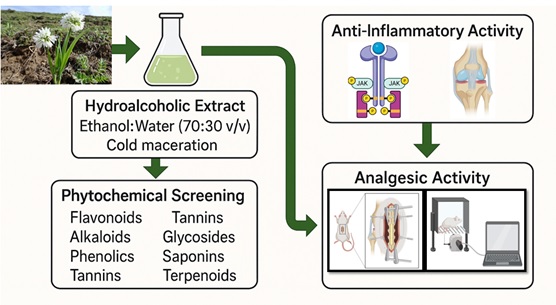
Abstract This study explored the anti-inflammatory and analgesic potential of Allium humile (AH) extract obtained through a green chemistry approach. The hydroalcoholic extract was prepared via cold maceration using ethanol:water (70:30 v/v), yielding 35.73 g from 300 g of powdered plant material, with an extraction efficiency of 11.91 %. Physicochemical analysis revealed standard values for total ash (6.83%), acid-insoluble ash (1.72%), water-soluble ash (3.90%), alcohol-soluble extractives (15.2%), water-soluble extractives (12.5%), and pH (6.3), indicating a good extract quality. Phytochemical analysis confirmed the presence of flavonoids, alkaloids, phenolics, tannins, glycosides, saponins, and terpenoids. The anti-inflammatory efficacy was investigated using carrageenan-induced paw edema, adjuvant-induced arthritis, and acetic acid-induced vascular permeability models in rats, while analgesic activity was evaluated using tail immersion and von Frey filament assays. Administration of AH extract at doses of 200 and 400 mg/kg showed significant anti-inflammatory and analgesic effects comparable to those of diclofenac sodium. These results indicate that AH is a viable source of bioactive substances for the management of inflammation and pain via natural therapeutic approaches.

Bioprospecting of Indigenous Microalgae Consortium from Palm Oil Mill Effluent for Simultaneous Wastewater Treatment and Lipid Production

Pages 213-238

https://doi.org/10.48309/AJGC.2026.542579.1814

Shinta Elystia, Irwan Effendi, Amun Amri, . Efriyeldi

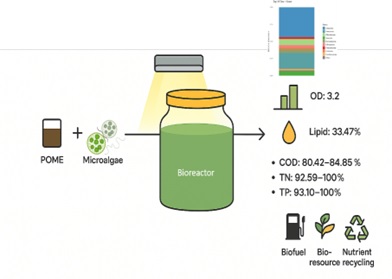
Abstract The use of indigenous microalgae for wastewater bioremediation provides a sustainable strategy for nutrient removal and biomass valorization, while also offering opportunities for the bioprospecting of novel strains. This study investigates the cultivation performance and bioremediation potential of indigenous microalgae consortium from palm oil mill effluent (POME). The strains were cultivated under varying POME concentrations, and their biomass productivity, optical density, lipid content, and nutrient removal efficiency were evaluated. Taxonomic analysis indicated the dominance of Chlamydomonas (43.7%) along with other green algal genera. Under optimal cultivation at 500 mg COD/L, the consortium achieved an optical density of 3.2, a lipid content of 33.47%, and the maximum removal efficiencies of COD (84.85%), total nitrogen (100%), and total phosphorus (100%) after 13 days of cultivation. These findings highlight the dual role of indigenous microalgae in wastewater treatment and bioresource production, while emphasizing their bioprospecting potential for sustainable biotechnological applications within the circular bioeconomy of the palm oil industry.

Antioxidant Potential of Secondary Metabolites Isolated from Macaranga Hypoleuca

Pages 239-257

https://doi.org/10.48309/AJGC.2026.542723.1815

Mastura Mastura, Akhmad Darmawan, Megawati Megawati, Siti Aisya, Beby Mustika, Sari Rizky, Rahayu Rahayu

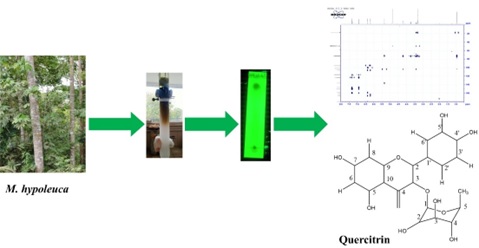
Abstract Macaranga hypoleuca is a member of the Euphorbiaceae family and demonstrates therapeutic properties. Its leaves contain secondary metabolites, such as terpenoids, tannins, and phenolic compounds. This study aimed to extract secondary metabolites from the ethyl acetate fraction of M. hypoleuca leaves and assess their antioxidant properties. Antioxidant testing of the ethyl acetate fraction via DPPH, FRAP, and ABTS methods resulted in IC50 values of 3.861, 2.0864, and 2.707 µg/mL, respectively. The leaves were isolated through methanol maceration and further partitioned with n-hexane, ethyl acetate, and butanol. The ethyl acetate fraction underwent gravity column chromatography, identifying the primary isolate in fraction F10. Spectral data from NMR and corroborative UV-Vis and FTIR analyses suggest the isolate F10E is Quercitrin (quercetin-3-rhamnoside), with an antioxidant capacity yielding an IC50 of 10.41 µg/mL via the DPPH method.

Utilization of Agricultural Waste into Terra Preta Biofertilizer and Its Impact on Crop Productivity

Pages 258-272

https://doi.org/10.48309/AJGC.2026.543982.1822

Nurbol Appazov, Altynkul Toibazarova, Rakhmetulla Zhapparbergenov, Gaini Taubekova, Zhainagul Yertayeva, Saken Kanzhar, Bekzhan Alimkhan, Magzhan Bekkhozhayev, Manas Serikbayev, Meruyert Tolegenkyzy, Dinara Niyazova, Indira Yespanova, Aidyn Appaz, Saltanat Appazova, Nurlybek O. Akhatayev, Bakhytbek Abzhalelov, Esenzhol Nazarov, Gulzat Askarova, Anipa Tapalova, Klara Darmagambet

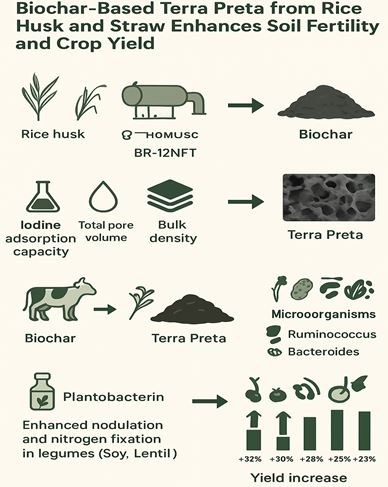
Abstract This study proposes the conversion of agricultural waste into the biofertilizer Terra Preta, accompanied by laboratory experiments aimed at processing optimization and soil fertility improvement. Thermal treatment of rice husks and straw yielded biochar, with pyrolysis conditions optimized and sorption properties investigated. The optimal pyrolysis temperature was determined to be 300 °C with a residence time of 60 min, under which biochar exhibited the highest sorption activity. The obtained biochar was subsequently mixed with manure and rice husks/straw for composting to produce a substrate suitable for vermicomposting with Eisenia fetida (California red worms). The optimal mass ratio for composting was found to be rice husk: manure: biochar = 70:20:10. The resulting compost underwent humification through vermicomposting for 90 days, yielding a product with a humus content of 31.8%, which corresponds to the Terra Preta concept. The produced Terra Preta biofertilizer was tested for its effect on crop productivity in melon, tomato, carrot, potato, watermelon, and cucumber cultivation, demonstrating a yield increase of 23–32%. Furthermore, the synergistic effect of this biofertilizer in combination with the biopreparation Plantobacterin AS was examined concerning the phenology of leguminous crops. The findings highlight the potential of Terra Preta biofertilizer to mitigate soil degradation and promote the rational utilization of agricultural residues such as husks, straw, and manure.

Green Chemistry Extraction, Formulation, Development, and Evaluation of Saussurea Obvallata Nanoemulsion-Based Gel for Wound Healing Potential

Pages 273-288

https://doi.org/10.48309/AJGC.2026.546538.1830

Shripad Motilal Bairagi, Rushikesh Dahiphale, Bhakti Bhawar, Tushar Pradip Dukre, Satish Madhukar Dhonde, Amol Vilas Supekar, Priyanka Dattatraya Manmode, A.A. Kazi

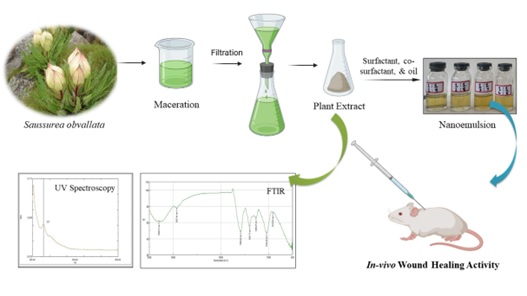
Abstract A wound is an injury to the body resulting from tearing, cutting, or piercing of the skin. Several herbal medicines have been shown to accelerate the healing process. This study reports the development and evaluation of a nanoemulgel containing Saussurea obvallata extract (4% w/v) to improve wound healing efficacy. The plant is known for its therapeutic phytoconstituents, and its incorporation into a nanoemulsion-based gel is designed to enhance skin permeability, solubility, and sustained release. The nanoemulsion was prepared using oleic acid, Tween-20, and PEG-400, and was converted into a gel by incorporating Carbopol 940. Among the formulations, NEG 1 (nanoemulgel) showed optimum stability, with no phase separation and desirable physical properties confirmed by thermodynamic tests, including centrifugation, heating–cooling, and freeze–thaw cycles. The optimized nanoemulgel exhibited high clarity with 97.93% transmittance, a skin-compatible pH (5.10), satisfactory drug content (95.98%), appropriate viscosity (13,663 cP), and favorable spreadability (28.13 g.cm/sec). Zeta potential analysis revealed a value of –45.3 mV, confirming good stability due to electrostatic repulsion. The in vivo wound healing activity was evaluated using an excision wound model in albino Wistar rats. The nanoemulgel-treated group demonstrated significant wound contraction with complete epithelialization within 21 days, which was comparable to the standard treatment. Overall, Saussurea obvallata nanoemulgel shows strong potential as a novel and effective herbal therapeutic for wound management.

Aquaculture Effluent as a Green Alternative to Fertilizers: A Study on Nutrient Recycling and Heavy Metal Dynamics in Soil-Plant Systems

Pages 289-299

https://doi.org/10.48309/AJGC.2026.543805.1821

Mohannad Qurie, Manal Wazwaz, Ragheb Razem, Karmel Awad, Omar Ayyad

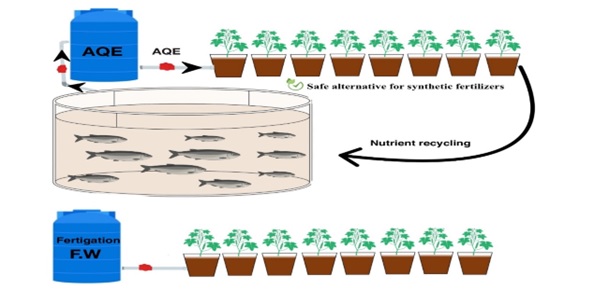
Abstract The valorization of waste streams is a cornerstone of circular economy and green chemistry principles. This study investigates the use of aquaculture effluent (AQE) as a green fertilizer for irrigating red leaf lettuce (Lactuca sativa var. Red Sails), proposing a sustainable agricultural solution that addresses two issues: aquaculture waste management and reduced reliance on synthetic fertilizers. A greenhouse experiment compared lettuce irrigated with tilapia AQE to a control irrigated with freshwater (FW) supplemented with a commercial fertilizer. Results showed no significant differences in plant growth parameters (branch number, leaf length, and biomass) or tissue chemical composition between treatments. Crucially, post-harvest soil analysis revealed no accumulation of heavy metals beyond initial levels and no detectable microbiological contamination. The potential of AQE for nutrient recycling was confirmed, as soil levels of total nitrogen (TN), total phosphorus (TP), and total potassium (TK) were maintained or improved. These findings demonstrate that AQE irrigation is a viable form of waste valorization, offering a safe and effective green alternative to conventional fertigation that supports circular nutrient management without compromising soil health or food safety.

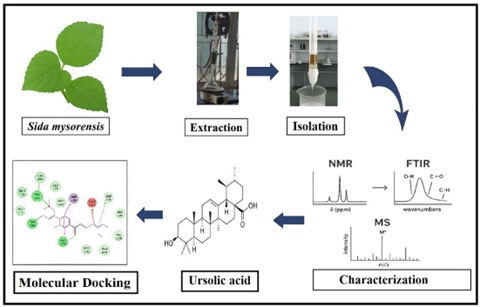
Bioactive Potential of Ursolic Acid Isolated from Sida Mysorensis: Structure Characterization and Targeted In-Silico Analysis for Alzheimer’s Disease

Pages 300-314

https://doi.org/10.48309/AJGC.2026.543818.1823

Kokila Kuppusamy, Hemnath Elango

Abstract The objective of this study is to isolate and characterize ursolic acid (UA), a phytochemical compound from Sida mysorensis and to evaluate its anti-inflammatory and neuroprotective potential. To yield a pure compound from the whole plant of Sida mysorensis, gradient silica gel column chromatography was used. The structural identity of ursolic acid was verified through FTIR, ¹H-NMR, ¹³C-NMR, and mass spectrometric analyses. Molecular docking studies with Alzheimer’s disease–associated targets were performed using AutoDock Vina. Ursolic acid exhibited high binding affinities toward all three proteins implicated in neuroinflammation and Alzheimer disease progression. Docking analysis revealed stable hydrogen bonds and hydrophobic interactions within the active sites of GSK3β, ACE, and TACE. The most significant binding affinity was identified with TACE, highlighting the potential of ursolic acid in modulating the release of inflammatory cytokines. The pronounced binding affinity of ursolic acid, especially for TACE and GSK3β, highlights its potential role in regulating neuroinflammation, the amyloid β, and tau hyperphosphorylation, which are key pathological features of Alzheimer's disease. These findings emphasize ursolic acid’s promise in neurodegenerative drug development and reinforce the value of molecular docking as a predictive approach for identifying neuroprotective compounds. Ursolic acid isolated from Sida mysorensis showed strong binding affinities toward TACE, GSK3β, and ACE, with the highest affinity for TACE, suggesting potential regulation of neuroinflammation and AD pathology. These results highlight UA’s promise as a neuroprotective lead compound and support molecular docking as an effective tool for therapeutic prediction.

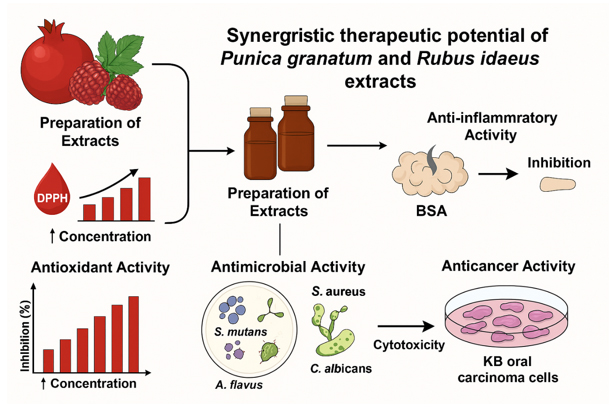
Synergistic Antioxidant, Anti-Inflammatory, and Cytotoxic Effects of Pomegranate and Raspberry Extracts: An In Vitro Study

Pages 315-326

https://doi.org/10.48309/ajgc.2026.542763.1817

Kishorwara Ramamoorthy, Umamaheswari Thirupamburam Natarajasundaram

Abstract The present study investigated the synergistic therapeutic potential of Punica granatum (pomegranate) and Rubus idaeus (raspberry) extracts, two polyphenol-rich botanicals known for their diverse pharmacological properties. Formulations prepared at ratios of 1:1 and 1:10 were systematically evaluated for antioxidant, anti-inflammatory, antimicrobial, and anticancer properties using established in vitro models. Antioxidant activity, assessed by the DPPH free radical scavenging assay, revealed a concentration-dependent effect with a maximum inhibition of 68.1% for the 1:1 ratio and 73.9% for the 1:10 ratio at 800 µg/mL, closely approaching that of the standard ascorbic acid. The anti-inflammatory activity, as determined by the BSA protein denaturation method, further confirmed significant inhibition comparable to diclofenac (82.4–85.9%), highlighting strong protective effects against protein denaturation-induced inflammation. However, neither formulation produced measurable antimicrobial activity against the tested oral pathogens (S. aureus, S. mutans, C. albicans, and A. flavus), suggesting limited efficacy under these conditions. Notably, both extracts displayed potent anticancer activity against KB oral carcinoma cells, with IC50 values of 66 µg/mL (1:1) and 60 µg/mL (1:10), indicating enhanced cytotoxic effects through possible phytochemical synergy. Collectively, these findings demonstrate that combined P. granatum and R. idaeus extracts are promising natural therapeutic candidates, exhibiting notable antioxidant, anti-inflammatory, and anticancer activities, particularly in managing oral cancer.

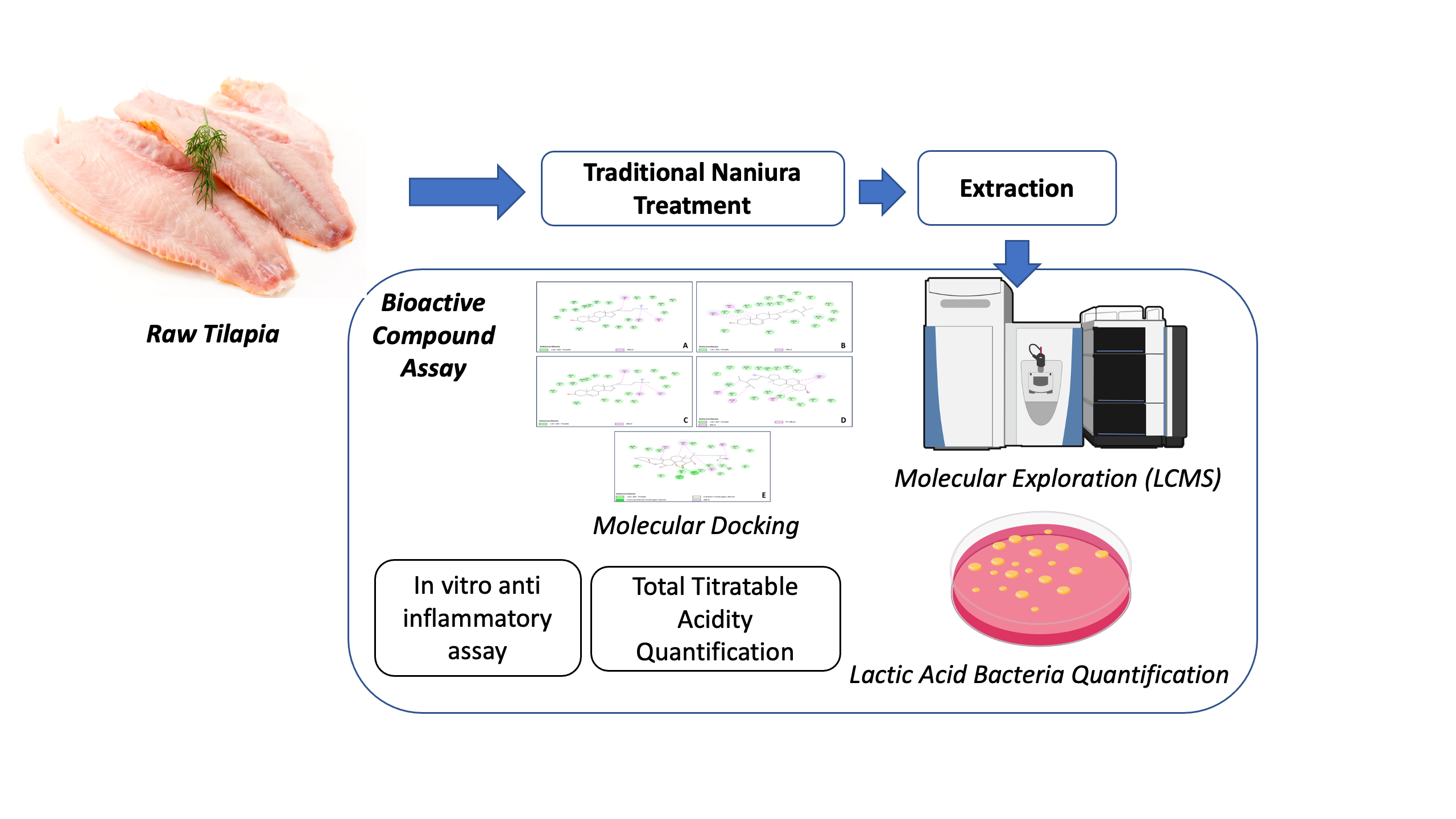
A Potential Probiotic from Fermented Tilapia Fish Naniura as a Natural Anti-Inflammatory: In Vitro and In Silico

Pages 327-340

https://doi.org/10.48309/ajgc.2026.545093.1835

Rudiana Agustini, Muhammad Nurrohman Sidiq, Andika Pramudya Wardana, Akhmad Sabarudin

Abstract Tilapia fish Naniura is a traditional fermented dish prepared without heating, using spices and natural fermentation, and is considered a potential probiotic. This study aimed to investigate the probiotic and anti-inflammatory properties of fermented tilapia Naniura. The research included the preparation of Naniura, isolation and enumeration of lactic acid bacteria (LAB), measurement of pH and total titratable acidity (TTA), antioxidant assays, LC-MS profiling, in vitro anti-inflammatory testing, and molecular docking. The results showed that Formula 1 (100 g tilapia) exhibited the highest LAB colony count, the lowest pH, and the highest TTA. LC-MS analysis identified 159 compounds, including steroid derivatives with potential anti-inflammatory activity. In vitro anti-inflammatory testing yielded an IC50 value of 802 ppm, indicating a moderate activity. Molecular docking further revealed a strong binding affinity between active compounds and inflammatory target receptors. These findings suggest that Naniura possesses probiotic properties and the potential to be a natural anti-inflammatory agent.

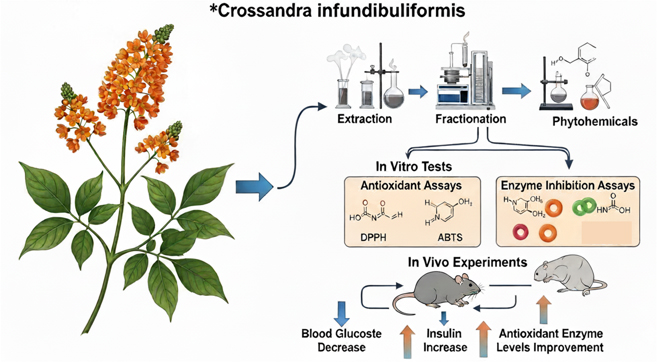
Green Chemistry-Based Extraction, Phytochemical Profiling, Bioactivity-Guided Fractionation, and Hypoglycemic and Antioxidant Potential of Crossandra infundibuliformis

Pages 341-356

https://doi.org/10.48309/ajgc.2026.548207.1834

Priya Mijgar, Uday Deokate, Prashant Shamkuwar

Abstract Crossandra infundibuliformis, a traditionally used medicinal plant, was evaluated for its phytochemical composition, antioxidant capacity, and hypoglycemic potential using bioactivity-guided fractionation and experimental models. Different preparations of the stem of C. infundibuliformis were subjected to phytochemical screening, fluorescence analysis, and quantitative assessment of the total flavonoid and phenolic content. Antioxidant potential was determined through inhibition assays of DPPH, α-amylase, and α-glucosidase, while acute oral toxicity was evaluated according to OECD guidelines. This study examined several parameters in diabetic Wistar rats that had been induced with streptozotocin (STZ), including the oral glucose tolerance test (OGTT), body weight monitoring, blood glucose estimation, serum insulin levels, and antioxidant enzyme activity (SOD, CAT, GSH, and MDA). Among the tested extracts, the ethanolic extract demonstrated the highest phenolic (241.28 µg/mL) and flavonoid (333.38 µg/mL) content. The ethyl acetate fraction exhibited potent DPPH radical scavenging activity (99.19%) and α-amylase inhibition (59.35%), while the n-butanol fraction inhibited α-glucosidase (77.24%) compared to acarbose. In vivo studies revealed significant antihyperglycemic effects, with OGTT showing a reduction in glucose levels from 161.00 ± 4.36 mg/dL (15 min) to 93.67 ± 2.08 mg/dL (120 min). Long-term treatment reduced blood glucose from 241.5 ± 2.43 mg/dL (Day 7) to 126.3 ± 10.25 mg/dL (Day 28) and elevated serum insulin to 820 ± 96.22 pg/mL. Antioxidant enzyme levels improved significantly, with increased SOD, CAT, and GSH levels and decreased MDA levels. Overall, the findings confirm that Crossandra infundibuliformis possesses substantial antioxidant and hypoglycemic properties, supporting its traditional use and highlighting its potential as a candidate for antidiabetic phytomedicine development.

Green Fabrication of 1-Amidoalkyl-2-naphthols Catalyzed by a Novel Magnetic Nanocomposite

Pages 357-371

https://doi.org/10.48309/ajgc.2026.550228.1838

Elham Setayesh, Abdolkarim Zare

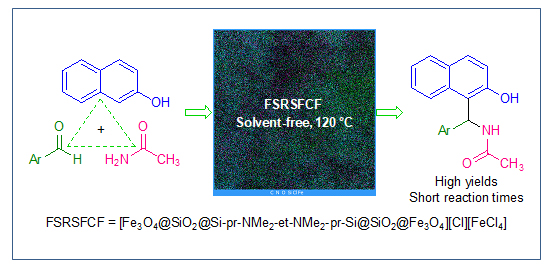
Abstract A novel magnetically responsive nanocomposite, designated as [Fe3O4@SiO2@Si-pr-NMe2-et-NMe2-pr-Si@SiO2@Fe3O4][Cl][FeCl4] (FSRSFCF), was manufactured, and analyzed through techniques such as EDS, elemental mapping, FE-SEM, FT-IR, TG, and VSM. This nanocatalyst demonstrated high catalytic performance and magnetic recoverability in the green, solvent-free fabrication of 1-amidoalkyl-2-naphthols through the one-pot multi-component condensation of aryl aldehydes, 2-naphthol and acetamide. The reaction proceeded rapidly, delivering the target products with high yields ranging from 92% to 97% within 20 to 30 minutes.